

How Can Functional Nutrition Support Women Through Menopause?
Menopause is often discussed in whispers and framed through negative stereotypes, yet it is one of the most significant and transformative stages of life. Understanding what’s happening in the body—and how to support it through nutrition and lifestyle—can help dismantle stigma and reframe menopause for what it truly is: a period of reflection, strength, and renewed autonomy.
To understand how functional nutrition supports menopause, it helps to briefly revisit how the menstrual cycle works before this transition. While this biology may feel basic, it provides essential context for understanding why symptoms arise and how targeted support can help.
Why Do Hormones Change So Much During Menopause?
Before menopause, the menstrual cycle is regulated by a tightly coordinated hormonal feedback system between the brain and ovaries.
The hypothalamus releases gonadotropin-releasing hormone (GnRH), which signals the pituitary gland to secrete luteinizing hormone (LH) and follicle-stimulating hormone (FSH). These hormones stimulate the ovaries to develop follicles, each containing an immature egg (ova).
As follicles mature, they release estrogen along with inhibin A and inhibin B. These hormones create a negative feedback loop, signaling the brain to slow the release of GnRH, LH, and FSH. After ovulation, the follicle becomes the corpus luteum, which produces progesterone to support the uterine lining. If pregnancy does not occur, progesterone levels fall and menstruation begins.
This predictable hormonal rhythm is what allows for regular cycles—and it’s this system that gradually shifts as menopause approaches.
What Happens to Hormones During Menopause?
Menopause typically begins around age 45, though timing varies widely and there is no “correct” age. Rather than a single event, menopause is a gradual process defined by the STRAW (Stages of Reproductive Aging Workshop) staging model.
Late Reproductive Stage (Stages −3A and −3B)
Cycles are usually regular, and pregnancy is still possible. However, ovarian reserve declines as fewer eggs remain available.
Early Menopause Transition (Stage −2)
This stage marks the beginning of perimenopause. Hormonal signaling from the brain increases, progesterone production becomes less consistent, and menstrual cycles often become unpredictable.
Late Menopause Transition (Stage −1)
Periods become very irregular, with gaps of 60 days or more between cycles. Hormonal fluctuations intensify, often leading to symptoms such as hot flashes, sleep disruption, mood changes, and weight gain. This phase can last up to three years, though duration varies.
Menopause (Stage 0)
Menopause is defined as the final menstrual period.
Early Postmenopause (Stages 1A and 1B)
These stages begin after 12 consecutive months without a period. Hormones continue to stabilize, but symptoms are often most pronounced during this time. Early postmenopause typically lasts two to six years as the endocrine system adjusts to a new baseline.
How Does Functional Nutrition Support Menopause?
Functional nutrition focuses on supporting the body’s changing hormonal, metabolic, and inflammatory needs during menopause rather than simply managing symptoms.
Nutrition for Hormone and Metabolic Health
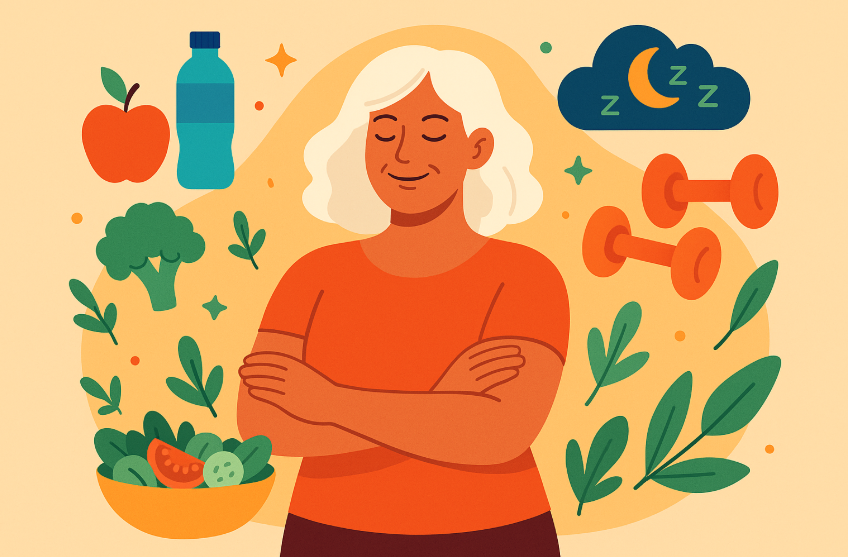
A Mediterranean-style diet—rich in fruits, vegetables, whole grains, lean protein, and healthy fats—has been shown to reduce inflammation and support cardiovascular and metabolic health during menopause.
Soy-based foods may also help alleviate menopausal symptoms. Soy contains phytoestrogens, plant compounds that interact with estrogen receptors in the body. While phytoestrogens cannot replace estrogen, they can provide mild estrogen-like activity that may help ease symptoms associated with estrogen decline.
Flaxseeds are another valuable dietary tool. Rich in fiber, healthy fats, and lignans, flaxseeds have been shown to reduce the frequency and severity of hot flashes and night sweats. For best results, flaxseeds should be consumed consistently at approximately 2–3 tablespoons per day for at least 12 weeks.
Why Meal Timing Matters in Menopause
When we eat is just as important as what we eat. Late or irregular eating patterns are associated with weight gain and disruption of circadian rhythms that regulate sleep, stress hormones, and appetite. Consuming the majority of daily calories earlier in the day may support improved metabolic health, reduced inflammation, and more restorative sleep.
Movement and Nervous System Support
Regular physical activity—especially walking—has powerful benefits for both physical and mental health during menopause. Walking as little as 12.5 miles per week has been associated with reductions in anxiety and depression, along with improvements in sleep quality and insomnia symptoms.
Can Functional Nutrition Make Menopause Easier?
Menopause doesn’t have to be something you “just get through.” With the right nutritional and lifestyle support, it can be a time of empowerment, clarity, and renewed wellbeing.
Functional nutrition helps identify what your body needs during this transition—whether that’s blood sugar support, inflammation reduction, nutrient repletion, or nervous system regulation.
We’re Here to Support You
Navigating menopause can feel overwhelming, but you don’t have to do it alone. Our 1:1 coaching services provide personalized, functional nutrition support to help you feel informed, confident, and supported through every stage of menopause.
If you’re ready to invest in your health and wellbeing, we’d love to support you. Reach out today to begin your journey.
Sources:
Dr. Haylee Nye, Managing Menopausal Symptoms Naturally: Where to Begin (webinar)
Image Sources:
Organicauthority.com
Freepik.com

Leave a Reply
The Preconception Playbook
This free playbook provides specific actionable tips to get started on your fertility journey, as well as what to avoid while you're trying to conceive.

Get the free playbook


Be the first to comment